‏إظهار الرسائل ذات التسميات cooking. إظهار كافة الرسائل

الأحد، 8 نوفمبر 2020

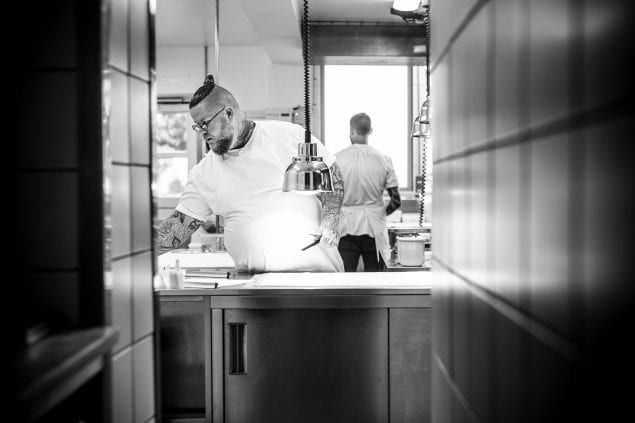
Cooking Through the Pandemic – An Interview with Executive Chef James Waters

الأحد، 1 نوفمبر 2020

How Three Tequila and Mezcal Making Families are Celebrating Dia de los Muertos

Dia de los Muertos is a deeply spiritual family Holiday in Mexican culture, and it has strong connections to food and drinks as well. We caught up with three tequila and mezcal making families to hear how they will be navigating this year’s celebration.

While Dia de los Muertos – Day of the Dead – has always been about celebrating ancestors together with loved ones, 2020 has certainly thrown a curveball at large gatherings and parties outside of the immediate family. To find out how families in the mezcal and tequila making world are tackling this year’s special circumstances, we checked in with the owners behind three of the most interesting brands on the market.

Mark & Cristina Howard, Co-Owners of Chamucos Tequila:
This Dia De Los Muertos, we will be having a small family dinner where we will be cutting “papel picado” that we can use for Christmas decorations while sipping on Tequila Chamucos neat or in a spiked “Champurrado.” It is a fun handcraft and all you need is tissue paper and scissors.

What are you looking forward to the most this Dia de los Muertos and why?
Usually at the beginning of October you start seeing in every bakery the traditional “Pan de Muerto”. We always look forward to it. It is delicious and we enjoy it with some hot chocolate or a shot of extra añejo as many nights as possible during this season.

What are some of your favorite memories connected to Dia de los Muertos and why?
Building the altar with the family. As we build it we talk about our loved ones that we are trying to honor. From choosing the right picture and placing some of their favorite foods and objects on the altar.

The moment when we light the candles is very magical. We feel as our loved ones are there.

Any tips on how consumers can still make the holiday a family event despite quarantine?
In our family during quarantine we started a book club, each one chooses a book every two weeks and then we connect thru video chat to comment on it. This Dia de los Muertos or Halloween it would be fun and very interactive to choose a scary story by a Mexican author that you can later discuss and have fun chatting about with your family.

Mexico as we know has a very close relationship with prehispanic mystical creatures (like Chamucos) and in more modern times with pop culture stories that circulate mouth to mouth (like the llorona). Many of these tales have been used to scare children, but as we grow we became less susceptible and find these stories a great source of entertainment.

What is your favorite thing to eat and drink for the holiday?
We love Mole Verde made with Chile Poblano and pumpkin seeds and of course the traditional Pan de Muerto paired with “Champurrado” spiked with Tequila Chamucos Extra añejo.

Abelardo Orendain, Co-Owner of Bribon Tequila

Most Mexican families make “Sus Altares de Muertos” (Day of the Dead altars) at home. This is a yearly tradition, regardless of the situation we are currently going through. Family junction is the main goal while we remember and honor our loved ones with what they liked and enjoyed in life. Being at
home, remembering special moments with loved ones who have transcended is the best way to celebrate.

Any tips on how consumers can still make the holiday a family event despite quarantine?
This is a sacred holiday for Mexicans. Therefore, being at home, remembering special moments with loved ones who have transcended is the best way to celebrate.

What is your favorite thing to eat and drink for the holiday?
This day is about “Nuestros Muertos” (Our Dead), in addition to putting their favorite foods and drinks on the Altars, “Los Vivos” ( The Alives ) also eat and drink the same so that, in a certain way, we can feel them alive with us. Typical dishes are, Mole, Tamales, Pozole, Tacos, Chilaquiles, and Pan Dulce, Mezcal and Tequla. The muertos bread and a nice hot chocolate is especially nostalgic for me.

Xaime Niembro, Co-Owner of Gracias a Dios

We won’t have any new traditions as we respect the existing ones. We will go and get some corn from our fields to make tortillas, go to the market to buy ingredients to make mole, distill a mezcal de pechuga in order to have a special spirit, cook all together, drink altogether, and talk about the people that we are honoring. This year it will be a more intimate celebration.

We love assembling the Altar de Muertos. It’s an opportunity to remember those who are no longer with us, by honoring them with their pictures, favorite foods, music, and beverages. We remember them with our friends and family even though we will be apart this year, we can still share stories and good memories of them. It’s a day dedicated to them.

What are some of your favorite memories connected to Dia de los Muertos and why?
Spending time with the family, cooking together, and making the favorite dishes of the people we’re honoring, listening to their favorite music, drinking mezcal. And of course, making mezcal de pechuga is one of our favorite memories.

Any tips on how consumers can still make the holiday a family event despite quarantine?
Cook, drink, and dance, honor someone special, no need to be somewhere else.

What is your favorite thing to eat and drink for the holiday?
Mole (negro, colorado, amarillito), rice and mezcal.

The post How Three Tequila and Mezcal Making Families are Celebrating Dia de los Muertos appeared first on Honest Cooking.


from Honest Cooking https://ift.tt/2TLJI05

الأحد، 18 أكتوبر 2020

How a Two Michelin-Starred Restaurant Takes Service To A Higher Level

As trends and demands in the hospitality industry change as rapidly as the seasons, restaurants struggle to keep up with the fast-paced competition. But Danish restaurant Jordnær proves that you can prevail by improving on the one fundamental thing that is always en vogue.

Supermodel Heidi Klum created a timeless catchphrase as the host of ‘Project Runway’ when she repeatedly warned the young fashion designers in-spe that “in fashion, one day you’re in. The next day you’re out.” The same mantra can be applied to the world of fine dining where an industry of cutthroat and fierce competition lies behind the beautifully plated courses.

Creative restaurateurs all over the world engage in a constant game of reinvention, keeping a finger on the pulse with popular trends and the ever-changing demands of increasingly picky consumers. Become boring and bland, and you’ll quickly discover there is another new it-restaurant ready to take your spot in the limelight on the proverbial Page Six. And what worse fate can you suffer than being forgettable?

A Strong Foundation
But at restaurant Jordnær (pronounced like “you’re there” but replacing the “th” with “n”), 10 kilometers north of Danish capital Copenhagen, the future seems more secure. The Nordic countries, and especially Denmark, have long been renowned for their simple yet innovative approach to fine dining, and Jordnær fits the mold perfectly, while still standing out as a unique gem. 

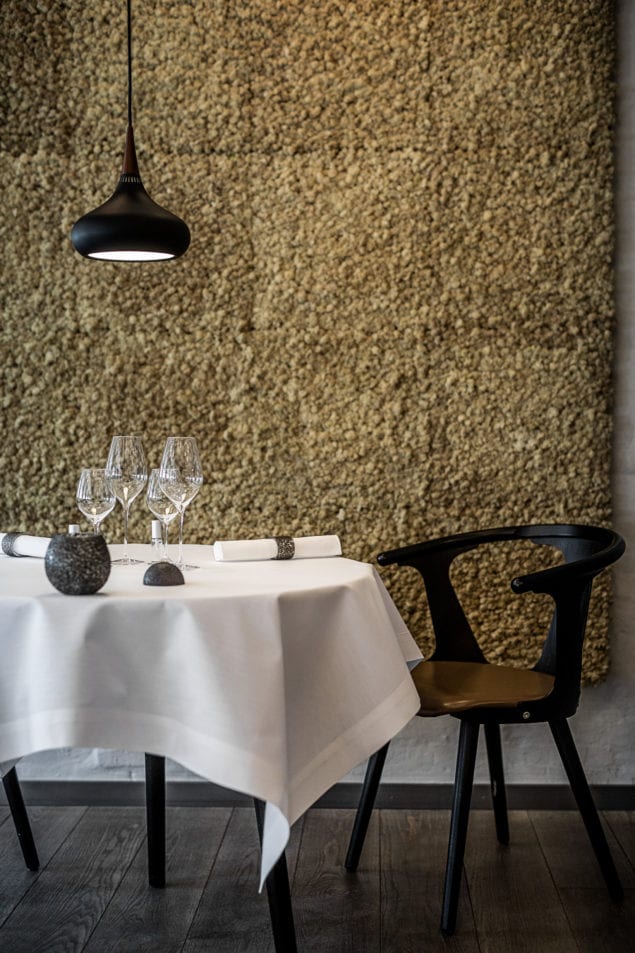
Jordnær – which literally translates as ‘down to earth’ or ‘grounded’ – has made a heavy mark on the culinary map and has a two Michelin-starred accolade to their name despite having only been open for three years. The menu consists of mainly Danish classics remixed for modern days with a mix of Nordic, French and Asian ingredients all balanced in full harmony. 

The produce is delivered daily and Jordnær treats it with respect. To avoid food waste as much as possible, you might see one ingredient pop up twice during your 18 course meal, but in such a creative way that it is almost unnoticeable. An example is the locally-sourced langoustine, where the heads are used to boil a broth for a jelly in the beginning of your dining voyage, while the chunky tails are wrapped in truffle and served with turbot for your main course. Down to earth with respect to Mother Earth. 

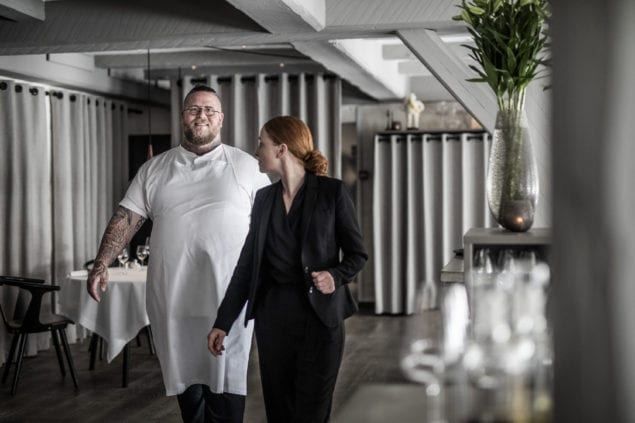
The key to their success lies in the minds of restaurateur couple Eric and Tina Kragh Vildgaard, who used their vast experience in the industry to create Jordnær – a restaurant that stays true to its name and goes beyond the smoke and mirrors of the latest fads and instead focuses on a wholehearted and earnest experience.

Eric and Tina Kragh Vildgaard at Restaurant Jordnær. Photo by Jesper Rais.

Tina and Eric know that while beautiful wallpaper might lure people like moths to a flame, it’s a solid foundation that perseveres and keeps the lights on. 

“At Jordnær it’s not about our egos or competing with other restaurants. We wanted it to be a place that we ourselves would visit and we constantly looked at it from the point of view of our guests. We treat our guests the best we can, and I believe that is what our stars in the Michelin-guide reflect, because after all it is a guide to guest experience and not an internal guide for the hospitality industry,” Tina says. She is in charge of the front of the house while her husband Eric is captain of the kitchen, and it is quickly evident that the couple cherishes their staff deeply and attributes a great part of their success to their team.

Their approach bears fruit, and at the same time as they were awarded their second Michelin star earlier this year, Tina Kragh Vildgaard also took the stage to accept Michelin’s prestigious “Welcome & Service Award 2020”. This has raised the service bar not only in the Nordic countries but globally, and proved that just like ‘The Tortoise and The Hare’, a steady and consistent will win the race.

The Little Black Dress of Hospitality

Iconic designer Coco Chanel invented the “Little Black Dress” in the 1920s. She wanted to create a versatile piece that reached a broader market. The versatility and timelessness, along with the neutral black color, has made it an iconic item that has been around for a century and that will never go out of fashion. But even it has been tweaked and altered to fit even the pickiest wearer.

Great service is the Little Black Dress of the hospitality industry and will never go out of fashion, but it can also be an unknown X-variable – and too much service can be a detriment. At Jordnær they seem to have solved the equation. 

Restaurant Jordnær received in 2020 a second Michelin star within just three years of opening. Photo by Jesper Rais.

“The service needs to be there, but without being there in an intrusive way,” Tina says and elaborates: “There is nothing missing from the service point of view that you would expect from a Michelin-awarded restaurant. But it’s a subtle and unnoticeable service, which is how it should be in our opinion.”

Instead, it is the extra attention to detail of the whole experience that is their fortay. Jordnær shifts their focus more to the ambience of the whole restaurant, while remaining professional. They create an atmosphere where guests feel as relaxed and comfortable as they would at home. You can come as you are, whether it’s a plain t-shirt and shorts or your finest suit; straying away from the norms of a fine dining restaurant that can often feel stiff and unwelcoming.

“From the moment they enter we want them to feel like they are going to a dinner party at a friend’s apartment,” Eric adds. 

Wholesome Service Before, During and After

But the level of service offered at Jordnær is so high that it doesn’t just start the moment you arrive. Before you arrive, Jordnær strives to create an intimate and familiar connection through personalised email correspondence and savvy googling skills. This has earned Tina a playful title amongst the team.

“Tina is our personal CIA agent,” Eric laughs.

“She spends a lot of time on each of our guests so she ensures we not only know their names but also dig a little deeper.”

Tina scours through the world wide web and uses easily accessible social media sites from Facebook and instagram to Pinterest and even LinkedIn to get a deeper understanding of who their guests are and what is important in their lives. These are used as keywords to spark up conversations for their dinner guests.

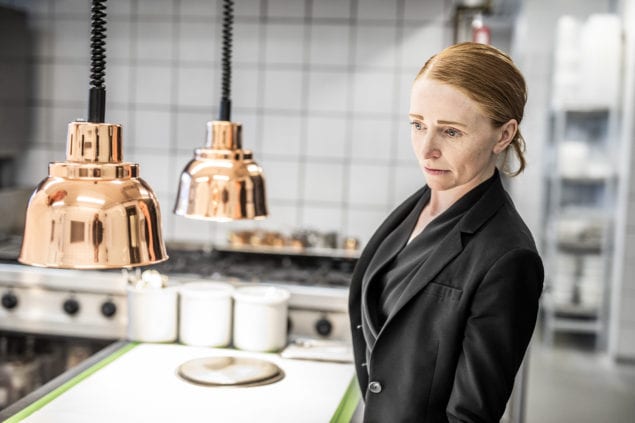
Mrs. CIA, Tina Kragh Vildgaard. Photo by Jesper Rais.

“We had one guest from the Danish Symphony Orchestra. She was retired but by looking at her profile we could see she had participated in a well-known quiz show on television about classical music. We remembered seeing her and that brought up a natural conversation where we complimented her for her talent and she was pleasantly surprised about that,” Eric says and adds that they still respect the privacy of people and never do anything to invade anyone’s privacy and only use what is publicly available online. 

This also ensures that each of their tables will get an experience tailored just for them, which is probably why guests tend to leave with a huge smile on their face that will follow them to bed.

A Smile and a Scone

But as the smile subsides as you hit the bed and enter dreamland it appears again the next day, when Jordnær sends each of their parties a personalized email and thanks them for their visit. Kind of like a good hostess will do to her guests after a dinner party. 

“It comes naturally from the experience they had the evening before during their visit. It’s not something that we feel we have to do, but something we genuinely want to do ,“ Tina says and adds that sometimes the guests actually beat them to it, and that they receive plenty of unsolicited emails from their guests thanking the team for a great night. Tina also adds that she thinks the standardised way of the industry is outdated.

“Other places send surveys asking about their experience, but we really don’t care about a survey. It tells us nothing useful. We rather send something personal that makes the guests wake up with a smile the day after and think back on the amazing night they had,” Eric adds. 

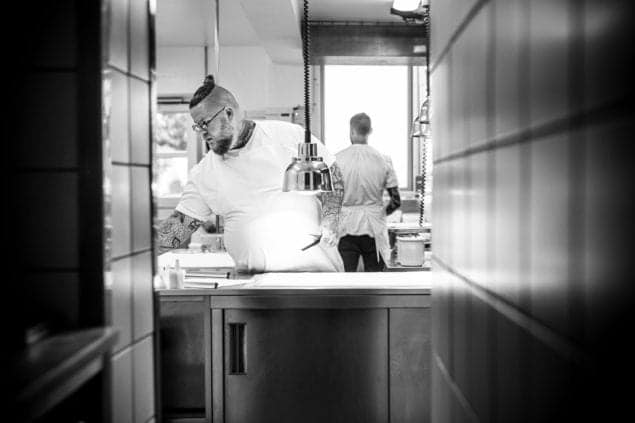
Eric Kragh Vildgaard during service. Photo by Jesper Rais.

The standard way of doing things can easily feel very forced and sometimes the wording, as well as the options of a survey don’t paint a wholesome picture and can be skewed to give the restaurant a better review than really intended.

But a smile isn’t the only thing you are going to wake up with, and Jordnær has upped the ante even higher.

“We are currently working on a breakfast box that we want to give our guests, so as they leave they get a box with scones and homemade jam and butter to take with them along with a personal handwritten letter, so they don’t have to worry about breakfast for the morning after”,  Eric says and adds that it’s also suited for that late night snack hunger that undoubtedly shows up for a lot of us. 

At the time of the interview, the last step was finding suitable boxes, and by now their late night/early morning treats are already a staple at Jordnær. This is addition to their vision of having a restaurant that doesn’t focus on their ego, but the experience of the guests.

Adding Drive and Passion to The Team

Recently Jordnær strengthened their grasp on service by adding a new member to their team who has a very specific point of view of what service really means.

“From my experience, many of the fine dining restaurants do the standard follow-up of a survey with ulterior motives. They do it to boost their ego and hear how good they are. For us it’s the opposite really. If we did a good job, the guest will naturally let us know, and we don’t need to push an answer down their throats. It goes hand in hand with giving great service to the guests without the guests actually noticing it’s there. We don’t want to be flamboyant”, Alberto Segade adds.

Alberto Segade is one of the newest additions to the management team as the head sommelier and assistant restaurant manager and has definitely brought his pizzazz to Jordnær and helped grease the wheels with his vast experience. Originally from Galicia, Alberto has worked in haute cuisine establishments like London’s Scott’s and Fera at Claridges as well as Racine in Reims, France. His expertise is so renowned that The Times did a portrait of him, discussing how he was one of the leading forces behind revamping the perpetual wine menu in one of the leading fine-dining and trendsetting food capitals of the world, London.

Spanish-born Alberto Selgado, Head Sommelier at Jordnær. Photo by Sam Zucker.

It was a mix of good connections and spare time that brought Alberto to Jordnær. Living in France at the time, he knew the then assistant restaurant manager at Jordnær and as he had some time in-between jobs, which he decided to spend in Copenhagen. The connection was immediate. 

“From the moment we met him we could feel his passion. He checked all the boxes we were looking for, he had the drive and the personality, but without making it about him. It was obvious to us he had a laid back coolness that could help our guests venture into the world of wine and he proved to truly be an upgrade to the restaurant,” Eric recalls. 

Alberto spent the summer there then left for a job that awaited him in England, but Eric and Tina were not ready to let go of the spanish talent and started to court him.

“But he had to also be ready to join us so we told him that whenever he was ready he should just let us know and we would have a place for him here. Five months later he sent me a message asking if the offer still stands and the rest is history”, he adds.

It was the vision of service at Jordnær that intrigued Alberto.

“They wanted to focus more on the sommelier services and I was really intrigued by their vision of being humble towards the guests and guiding them rather than telling them,” Alberto says.

He explains that he hasn’t made any major changes at Jordnær but more helped streamline their processes making it more polished and organised. It is apparent he fits the mold of humility and, like Tina, points to a collective team effort as the reason for their success.

Building a Strong Team

The team is also a constant work in the making. When Jordnær first opened three years ago Tina and Eric had a clear vision of the level of service they required from their team, but unlike many fine-dining restaurants that prefer their team to anonymously fade into the background, Jordnær looks more at the softer qualities they possess.

“Since opening we have gradually added more people to the team to strengthen our vision. Of course a certain skill set is required, but we go by personality. We get a lot of applications but the ones we choose are the people that we feel are a perfect fit to the vision we have at Jordnær. They are all very humble and honest. We are all very different in our service styles,” Tina says while Eric offers an elaboration:

“We have all worked with the flamboyant in-your-face waiters that talk down to the guest and act as know-it-alls. They might want to sell a wine that they know a lot about instead of actually listening to the guests and helping them find something that they like. It’s good that the waiters try to sell a wine that the sommelier has said goes well with the food, but it’s even more important to listen to the guest rather than the sommelier. As a guest you can sometimes sit and feel stupid, because you ask about a wine that the waiter clearly thinks is wrong to order. It shouldn’t be like that.”

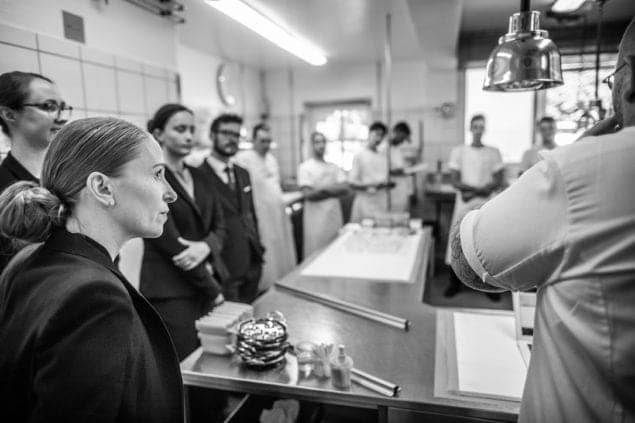
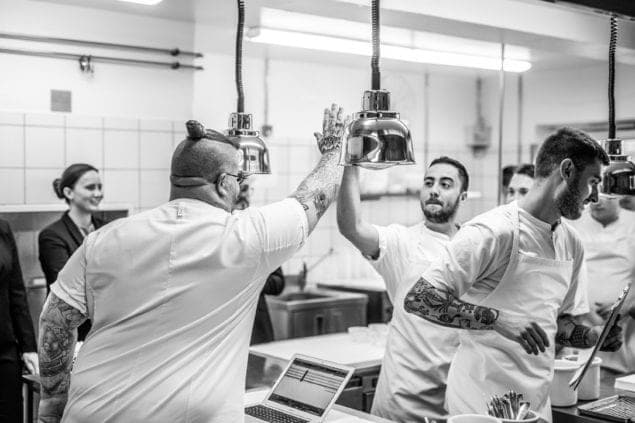
Building a strong team. Photo by Jesper Rais.

In the end, it boils down to Tina, Eric and Alberto trusting their gut and instinct and also knowing the limits of what even they can do.

“The thing is you can always tweak the technical skill of a waiter, but you can’t change their personality. That is something deeply implemented into a person.” Alberto adds. 

It might actually be an advantage if your canvas is semi-clean when you join the team at Jordnær, whether it be in the kitchen or front of the house. On paper you will still have designated waiters and cooks, but on a practical level the lines are more blurry. 

Knowing all the aspects of the restaurant is important for Tina and Eric and waiters are taught the basics in the kitchen, while the kitchen staff serves food just as often, if not more, than the waiters. This has also proved to be an asset at their staff meetings where each team member knows enough about the restaurant as a whole, and ideas for improvement are many.

“We value all our team members equally and we add the strengths of each of them to Jordnær. Good ideas are always welcome from any member of the team whether it’s the chef’s students or the restaurant manager. It’s bricks in our foundation to make us stronger,” Eric says.

No Dress Code Required

But when the service is so grounded and personal, does it not seem like a huge contradiction that the staff wears stuffy uniforms, that take away any personality from the waiters and instead makes them look bland and rather boring? The answer lies in the question really.

“There is this misconception about being uptight when you wear a suit, like you can’t be humble and give down to earth service wearing a uniform, but it’s not about that. If you have a humble personality it shines through the uniform,” Tina says and adds that it strengthens the being there but not being there.

“It’s more about creating a unison in the same way doctors wear medical coats. It’s the interactions with the guests that matter. Whether you are wearing a suit it’s not important.”

Her last sentence can be interpreted in two ways, because just as waiters wearing suits is not important if they have a good personality, it’s not important for the guests either. Jordnær really emphasises that they want the guests to feel as comfortable as possible when they come, so if comfort means shorts and a t-shirt it makes no difference and you are welcome as you are.

“We had a guest calling us the other day who had a reservation. It was 32 degrees celsius and he asked about the dress code. Hesitantly he wanted to ask if it was okay to wear shorts, and he was relieved when we reassured him that of course he could. They can wear whatever they want,” Eric says but adds with a laugh that they do abide by the classic saying of ‘No shoes, No shirt, No service’.

Though being a stylish restaurant, there is on dress code at Jordnær. Photo by Jesper Rais.

The mantra of coming as you are is also something they live by themselves. Eric explains that his dress shirt is packed away for those extra special occasions when the formal shirt is absolutely required. A black t-shirt is his preferred clothing item no matter where he goes, and no one should judge a book by the cover.

“When I go out my money is as good as the next man’s, so if I am not welcome at a place because of what I am wearing then I don’t want to be there in the first place. For us, all our guests are valued and appreciated and it doesn’t matter if you are a CEO or a student who saved up to come visit us. You will get the same experience and we don’t give beneficial treatment to anyone. Measuring people by how they look is a personal pet peeve of ours and there is nothing worse than spending a minor fortune at a restaurant but having a feeling of not being welcome,” Eric says.

He continues and explains how many people still think that this is a solid rule of fine dining. These guests are tense when they arrive because they try to uphold a posh poise, often resulting in sweat and discomfort from the heavy fabrics of elegant evening wear and they forget that a night out of dining should actually be less stressful than cooking at home.

“And as soon as we come down to their table and chat with them they immediately become comfortable and it’s just a visible change in their body language and demeanor. Guests are here to enjoy. You don’t go out to places where you don’t feel welcome and you certainly don’t pay thousands of kroners for a meal at a place where you don’t feel comfortable. That’s the piece of the puzzle missing in fine dining – disregarding your own posh and better-than thou attitude and instead shifting the focus on having genuinely smiling guests that are having the time of their lives,” Eric says. 

He is immediately backed by Tina, who circles back to the name of the restaurant. She also cleverly uses a visual reference to, properly, the most relatable scene in the movie Pretty Woman to state her case.

“It’s the name Jordnær. The meaning literally is down to earth and it’s not just a sassy catchphrase but a way of living that we live strongly by. Most of us have probably had the experience of entering a deluxe boutique of some sort and the people working there, who are actually being paid to assist their customers, might just glance at you and pass judgement on you, believing that you definitely can’t afford anything in there, so why even bother trying to help you?. At Jordnær we want to welcome everyone at the same level.” she says.


Inclusion of a tea-menu, inclusion of people
And welcoming people at the same level is not just referring to social status and appearance, but also in different groups of the society as well as within the guests of the party. 

Alongside their accompanying wine menu, Jordnær is the first restaurant in the North to have added a non-alcoholic substitute that can even intrigue the biggest wine lovers with their tea menu. This solves one of the industry’s biggest oversights, and the original idea was partly Alberto’s.

“The choice of a tea menu on the beverage side is something we started doing in London five years ago,” Alberto says and recalls the situation that sparked the idea.

Participating in a wine fair, he and his partners stumbled upon a winery that used different variations of teas as a palette cleanser for the visiting guests at the fair.

“We thought it was amazing and left the fair thinking it was the most interesting part. Of the exhibition. We started to develop it with the idea of using it in our restaurant,” he says and explains how it solved a huge roadblock that especially London experiences.

“In London we have a lot of guests from the middle east who don’t drink alcohol, which causes a huge demographic to steer away. This was the answer to the problem while also being a more creative choice than serving the run of the mill Coca Cola and Juice”.The teas are made in house and are chilled at around 15 degrees, which gives it the same temperature as the wines. Alberto explains how it’s also a healthier choice than sodas and juices that have a high sugar content. It is also served in wine glasses and mimics the color palette of the wine, so that you don’t feel like the odd one out at the table. Lastly it has acidity and tannins like the wine, and the incredible variations of different teas makes it easy to pair perfectly with the food, offering basically everything the wine does but without the alcohol. The teas are not just classical teas as you know them.

“We don’t only work with the classical tea flavours, but also a large selection of herbs because we really want to keep the caffeine level down as much as possible as 10 glasses of caffeine beverages might not be how you want to end your evening,” Alberto explains while giving us a few examples of the pairings made.

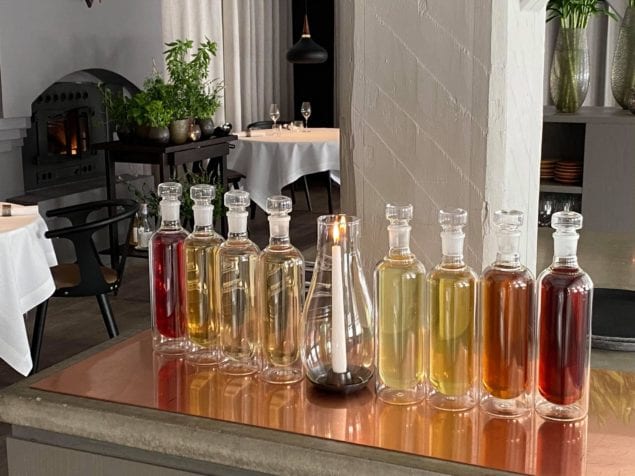
Tea menu at Danish restaurant Jordnær
The tea menu is a great alternative to the classic wine menu and is more inclusive and healthy than a similar juice choice.

“An example is our caviar that we serve with a tea made from an almond blossom from Spain. It has a nutty taste but also mixed with floral flavour that is a perfect palette for the course. Or if you want something richer, then we have a tea made on roasted oolong from Taiwan that can be brewed to have different flavours, so you can have it be more smokey or more salty. There are so many varieties of tea it’s incredible,” Alberto adds and admits that the addition is both more time and cost consuming, but they are still just dipping their toes in the water and will dive in deeper with time.

Alberto is almost certain that popularising tea into fine dining is slowly brewing in other restaurants in the North and notes both guest preference and personal feedback as reference.

“People are now more than ever thinking more about what they put into their bodies and alcohol and sugar are two of the biggest vices people tend to drop. So I think a tea menu has potential to become popular on a much bigger level. On a pure digestive level, it is also harder on the body to digest 10 glasses of juice than it is 10 glasses of tea.”

A juice menu as a substitution is something Albert has only tried once, but the memory sticks as a fairly unpleasant one. He recalls how the sugar left him a bigger headache than he would ever get from a wine menu, and a sugar rush so close to bedtime does no one any favours. 

Alberto also noted that the hospitality industry of the area is becoming more and more fascinated with the concept and he is often approached for tips.

“I get feedback from other restaurateurs who come and try it and some have even tried to play around with it. It definitely has possibilities as people start to expect more than just the wine menu, and let’s face it. The wine menu has not had a proper update worth mentioning since its inception which is almost ancient by now”.

For more info on Restaurant Jordnær, visit www.restaurantjordnær.dk

The post How a Two Michelin-Starred Restaurant Takes Service To A Higher Level appeared first on Honest Cooking.


from Honest Cooking https://ift.tt/2Ha39gc

السبت، 26 سبتمبر 2020

Dashi With Lobster Takoyaki, Sisho Tempura and Beluga Caviar By Chef Eric Vildgaard

A two Michel starred Chef and his quest for the perfect dashi, makes a gorgeous and heartwarming dish for colder nights.

Dashi is the base of Japanese cuisine. An indispensable cooking broth most commonly made from kombu (kelp seaweed) and katsuobushi (dried bonito flakes). Its umami taste enhances and harmonizes preparations and Chef Eric Vildgaard built an outstanding course with his own version of it.

“To me, dashi is one of the most beautiful and pure things that you can make. Great dashi is a declaration of love to your guests. At first, I didn’t really get it, though. I tried to make dashi using regular kombu seaweed and ordinary mirin and katsuobushi. But the greatness and beauty didn’t really come through. I couldn’t understand why, so I educated myself a bit more on the subject.

Through my supplier YesChef, I got my hands on the so-called Rausu kombu. It is a very potent type of seaweed harvested around the city of Rausu on the island of Hokkaido. It contains glutamic acid in very high amounts, which is what gives the seaweed a very intense umami. I also managed to find some katsuobushi of the highest grade. Katsuobushi is bonito tuna that has been dried, fermented, and smoked, and it comes in many grades of quality, which I wasn’t aware of at first. But I soon found out that the quality of the highest grade is not at all comparable to the lowest.”

Eric Vildgaard in the kitchen of two Michelin-starred Jordnær in Copenhagen. Photo by Jesper Rais.

“Finally, some good mirin was needed. Mirin is a subtly sweet rice wine widely used in Japanese cooking. Again, quality is key. Yeschef supplied me with an aged variety, which is a really refined product offering a quality of taste that has nothing to do with the standard mirin. When I made my dashi using these products, I could finally see clearly. The taste was clean, intense, and vastly superior to what I had made before.

Once again, the fact that we are never better than the quality of our products, was underlined. The products are what carry us. Just like we need to know the difference between caviar and cod roe, we also need to be able to tell the difference between the ordinary and the extraordinary when it comes to seaweed, rice wine, and dried tuna.

Here, the dashi is served with a fried Japanese dumpling called a takoyaki. The dashi frames the takoyaki, to which we add a piece of lobster, adding a set of elegant wings to the dumpling. Serve your guests this soul-warming and aromatic dashi on a cold winter night, and you can almost be sure that it will be a great evening.”

Print

Dashi With Lobster Takoyaki, Sisho Tempura and Beluga Caviar

An elaborate and heartwarming dish from a two-Michelin star Chef
Course Appetizer
Cuisine Asian
Author Natalia Bohórquez Rodríguez

Ingredients

Dashi

  • 500  gr filtered water
  • 50 gr daikon
  • 25 gr ginger
  • 10 gr Rausu kombu
  • 40 gr aged mirin
  • 4 gr Okinawa seasalt

Takoyaki

  • 140 gr all-purpose flour
  • 15 gr baking soda
  • 6 gr Okinawa seasalt
  • 2 large whole eggs
  • white soy
  • 360 gr Dashi
  • 21 gr fried tempura batter
  • lobster 
  • Beluga caviar (we use caviar from Noble Russian Caviar)
  • 100 rice bran oil

Cooked Lobster

  • 1 lobster 500 – 600 gr
  • 3 lt water
  • salt
  • dill stems
  • 1/2 lemon

Shiso tempura

  • 4 green shiso leaves
  • 50 gr manitoba flour
  • 50 gr corn flour
  • 50 gr non-glutinous rice flour
  • 60 gr baking powder
  • sparkling mineral water
  • 500 rice bran oil

Lobster mayonnaise

  • 2 gr egg yolks
  • 6 gr fine salt
  • 15 gr white wine vinegar
  • 10 gr fine Dijon mustard
  • 330 gr lobster oil

Lobster oil

  • 350 gr neutral oil
  • lobster shells

Apple caramel

  • 10 red apples with high acidity

Instructions

Dashi

  • Thinly slice daikon and ginger. Pat the kombu with a damp cloth.
  • Add all things to a pot, except the katsuobushi, and bring to a simmer.
  • Remove from heat and add katsuobushi flakes, let it infuse for 6 minutes and strain through a fine masked strainer.

Takoyaki

  • Beat the eggs into the dashi, sieve the flour and bicarbonate and whisk it into a batter.
  • Add the seasalt, fried tempura batter and white soy to taste. Let the batter rest for 2 hours.
  • Fry the batter in a takoyaki pan using the rice bran oil and adding the pieces of lobster to the centre of the ball. 
  • Top with caviar, and serve with the lobster mayo, apple caramel, shiso tempura and steaming hot dashi on the side.

Cooked lobster

  • Kill the lobster by splitting the head in the cross on top of the head – this will kill the lobster instantly.
  • Bring the water to a boil, and taste with salt (it has to taste like light seawater), add the dill stems and the lemon. 
  • Put the lobster in the boiling water and cook for 4-5 minutes, depending on the size. 
  • After cooking, transfer the lobster into cold salted water and cool down. After cooling down, free the lobster from the shell and remove the colon string.

Shiso tempura

  • Make the batter by mixing all the dry ingredients and adding sparkling water until the right consistency is obtained.
  • Mix with chopsticks (the right consistency is when the batter clings to the chopsticks in a thin layer).
  • Coat the shiso leaves, and fry them in the rice oil at 160’c until crispy. Remove from oil, rest on a rack, and dust with salt.

Lobster mayonnaise

  • Whisk egg yolks with salt, vinegar and mustard, add the oil in a thin strain while whisking continuously until all the oil is absorbed.

Lobster oil

  • Crush the lobster shells and put in a pot, cover with oil, and confit at 80’c for 3 hours, then strain and cool down.

Apple caramel

  • Juice the apples, and cook the juice in a pot, until the juice starts to caramelize into a thick syrup. Cool down.

Learn more about Jordnær through their website and this love story.

(original text by Lars Roest-Madsen – Photo by Jesper Rais)

The post Dashi With Lobster Takoyaki, Sisho Tempura and Beluga Caviar By Chef Eric Vildgaard appeared first on Honest Cooking.


from Honest Cooking https://ift.tt/3j67Fu3

الأربعاء، 16 سبتمبر 2020

The Golden Paella of Soccarat NYC

I thought I experienced authentic Spanish cuisine prior to dining at New York’s Soccarat Restaurant, I was wrong. My false introduction to Spain’s cuisine was in the form of Paella at a Cuban restaurant. First off, it’s obvious authentic Spanish cuisine cannot be served at a Cuban restaurant. Yet I was unaware or too excited about the piping hot pot of rice of meats, seafood, and other ingredients. The paella was not authentic to Spain.

As in any country, authentic cuisine celebrates the simplicity, unpretentious, and beautifully ingredients of said country. For Spain, some of these ingredients include paprika, saffron, olives, meats, seafood, and rice. All important when preparing an authentic dish like paella. While these ingredients such as rice exist in other countries, they differ by country. Heck even by region and so does the cooking techniques. Using my first paella experience as an example. I remembered a deep pot of longer rice grains served on the table. Both qualifying my first paella experience as a fake.

In fact, Spain grows shorter grain rice and as a result, uses it for its paella. Paella activists say that the short-or medium-grain rice is best because it soaks up the most liquid and flavor. Whereas the pot rather the pan used for paella is shallow. “Paella”, a Valencian word derived from the Latin term for “pan.” Hence pans must be used and are wide and shallow. The width and shallowness allow the liquid to evaporate. Forming as much crispy golden crust or socarrat on the bottom as possible.

Although there are many paella variations (meat, seafood, etc.) they all must have this beautiful slightly burnt rice at the bottom. Like the “bun bun ” of Trinidad’s national rice dish pelau. A pelau sans a spoonful of bun bun is not pelau.

Leading me to my first real paella and Spanish cuisine experience at Chef Jesus Lolo Manso’s Socarrat. Earning raving stars from multiple culinary critics like Eric Asimov author of the 2004 Times review on his restaurant La Nacional. For over 15 years he enlightened the palettes of many with Spain’s humble cuisine like paella. While La Nacional is closed, he successfully opened three Soccarat restaurants. I had the pleasure of dining at Soccarat Chelsea.

Dining at Soccarat.

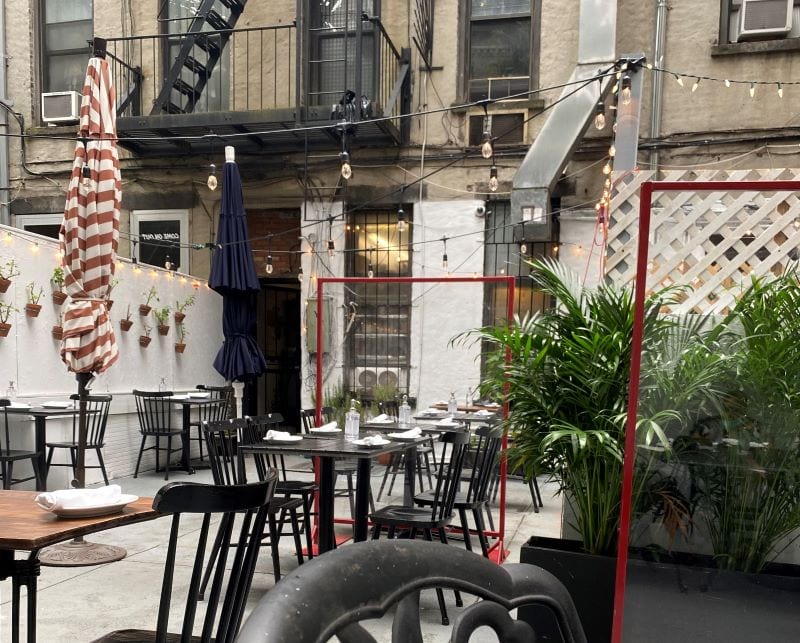
Soccarat Outdoor Dining

I want to disclose, I have a soft spot for any restaurant that has the ability to transport you to another place. Soccarat’s ambiance has a charming romantic feel. My aunt ( guest of the night) and I sat on the Spanish style furniture in the outdoor patio at Soccarat’s Chelsea location. Complimenting the cooling breezes of fall’s approach, the sounds of soft Spanish guitar melodies were thrumming. Even before biting into the incredible food, we were smitten.

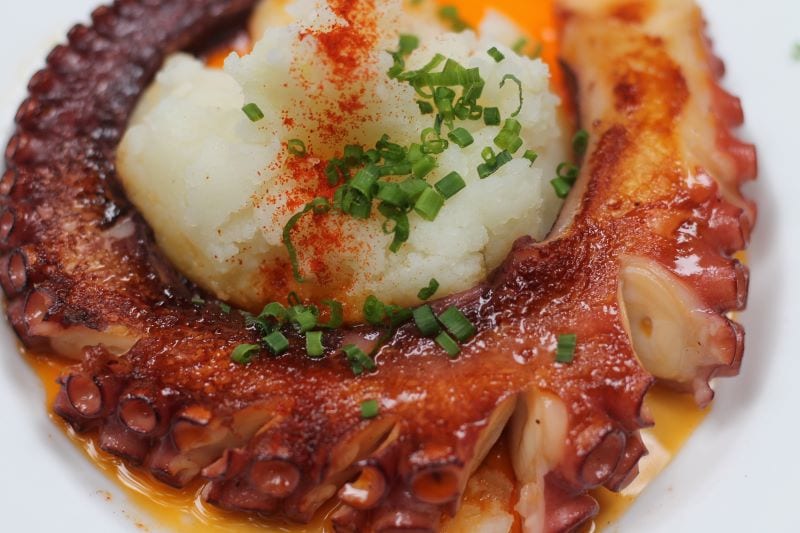
Warming up for the decadent paella we ordered other signature Spanish tapas (snacks and small plates). We started with Gambas al Ajillo; sizzling shrimp cooked in olive oil, minced garlic and Guindilla peppers. Pulpo a la Plancha (Seared Galician Style Octopus) and Calamar a La Plancha (Seared Squid) both seared to perfection, offering earthy smoky flavors representing Spain’s unpretentious culture. Raptured by the warmth our starters we were ready for the golden star of the night; the Paella.

Pulpo a la Plancha
Pulpo a la Plancha

Soccarat’s Golden Cuisine.

Paella
Paella

To note the first of its kind, Paella or Paella Valenciana has chicken, rabbit, and snails. Spiced with smoky sweet paprika and a few strands of golden saffron. “Authentic” Paella does not include the rabbit and snail. It uses traditional short cut free techniques, fresh ingredients, and passionate cooking like Chef Lolo’s.

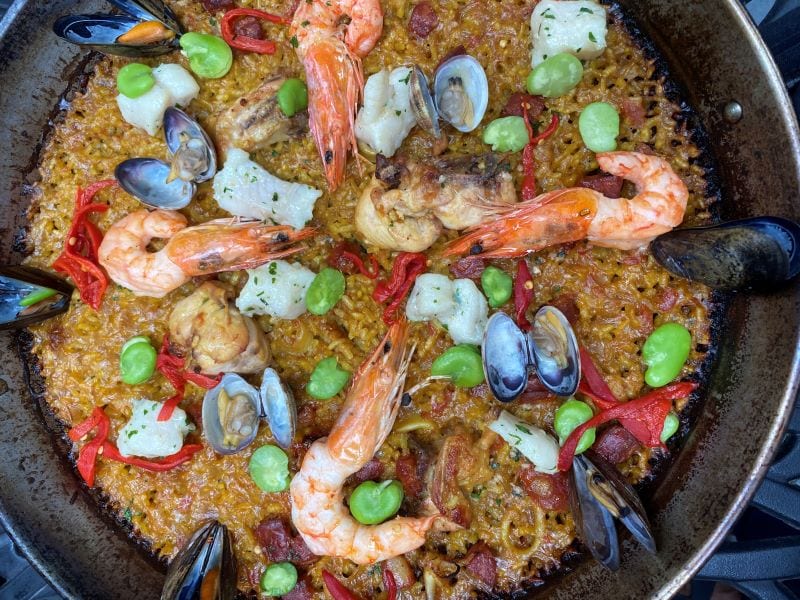
When the massive pan of golden-brown rice hit the table, my eyes lit up. The golden glow of the rice had chicken, chorizo, shrimp, white fish, squid, mussels, cockles, fava beans, peppers, tomato sofrito. I could hear crackles as the spoon scraped the socarrat from the bottom. I said in sotto voce this is incredible to my aunt and took a large spoonful, straight from the pan. The rice was the perfect combination of softness and chewiness, just as Chef Lolo described. I could taste the earthy flavor of the saffron, followed by the sweet and slightly smoky paprika. With every bite came a new texture and flavor, the savory taste of the meats, mild sweetness of peppers, and saltiness of the sea.

On my way home, I thought about the Cuban paella served in a pot. Tasting Soccarat’s, I can’t imagine eating the Cuban’s version again.

The post The Golden Paella of Soccarat NYC appeared first on Honest Cooking.


from Honest Cooking https://ift.tt/2RxuMRU

الأحد، 13 سبتمبر 2020

Perfect the Princess Cake with Chef Emma Bengtsson

Get your oven mitts ready to finally perfect the Swedish Princess Cake with the help of two Michelin Starred Chef Emma Bengtsson.

Except for the Swedes, apparently the Princess Cake is hard to make.  The multiple steps the decadent cake requires like baking the light, spongy cake, rich pastry cream, jam and the bright green marzipan! It certainly categorizes it in the “make for special occasions only” list.  Also, just to note you probably won’t nail it on the first try. But with patience, perseverance and of course a classic recipe from a Swede, you will one day perfect this traditional Swedish cake.  As for the Swede you can count on, she is the Executive Chef of two Michelin Star restaurant Aquavit in New York and James Beard nominated for best chef in New York City. She’s also known as Chef Emma Bengtsson.

Chef Emma Bengtsson Headshot
Chef Emma Bengtsson

A native of the town of Falkenberg on Sweden’s west coast, like most Swedes Chef Emma Bengtsson enjoyed her first slice of Princess Cake as a child before her exceptional culinary career began.  “I love the sweet and almond flavor and the texture has a bit of a bite to it before it melts in your mouth. Whereas the thin layer of raspberry jam gives you that sour taste that balances the fattiness of the cream and is perfect. It doesn’t look like it’s much but it’s just the right amount. The Princess Cake is a classic and showcases Swedish cuisine at its best. You can’t get any more Swedish than this. Unless you add Swedish meatballs into the equation.” says Chef Emma.

The Origins of the Princess Cake

Originating from Sweden’s royal family when the Home Economist taught the three princess how to cook and bake. This cake was first called Green Cake and later dubbed the Princess Cake as it became popular for its beauty and sweetness. The Princess Cake is now one of the most well-loved Swedish cakes, often served at birthdays or even weddings.  Although it is not the easiest to bake, you’ll definitely feel victorious after creating Chef Emma Bengtsson’s recipe.

The Princess Cake - By Michelin Star Chef Emma Bengtsson
 
Princess cake aka Prinsesstårta, is one of the most well-loved Swedish cakes, often served as a birthday cake or even as a wedding cake. It’s essentially a cream and marzipan cake, easily recognized by its green color.
Author:
Recipe Type: Cake
Cuisine: Swedish
Serves: 12
Ingredients
Sponge Cake 10 large eggs 1 ¼ cup sugar
  • 2 cups cake flour
  • 3 tablespoons corn starch
  • 1 + ⅝ teaspoons baking powder
Pastry Cream
  • 2 cups milk
  • 1ea vanilla bean
  • ½ cup sugar
  • ⅓ cup of cornstarch yolk of 5 large eggs ⅛ cup butter
Other ingredients needed
  • 7 ounces raspberry jam
  • 3 cups heavy whipping cream 3 cups marzipan
  • Green food coloring Red food coloring
Instructions
To Make the Sponge Cake
  1. Start by whisking the egg and sugar on high speed in a KitchenAid for 30 minutes.
  2. Mix the dry ingredients together and sift them through a tammy.
  3. Fold in the flour mix into the egg mix.
  4. Pour out the batter onto a parchment paper lined sheet tray and bake at 325F for about 4 minutes.
  5. Remove and let cool down before cutting out three 12-inch size rings from a cake ring.
To Make the Pastry Cream
  1. Bring the milk and the vanilla bean to a boil. Split the vanilla bean and scrape out the seeds. Add the whole bean as well to the pot.
  2. Mix the sugar with the cornstarch and add the egg to it. Whisk it together.
  3. Pour the boiling cream over the sugar and egg mix. Whisk.
  4. Add the mix back into the pot and bring to boil under constant whisking. Let boil for 5 minutes.
  5. Add the butter and remove from the pot into a bowl sitting on an ice bath. Place a plastic wrap touching the surface of the pastry cream and place in fridge overnight.
  6. The next day pass the cream through a tammy.
To Assemble the Princess Cake:
  1. Cut out three 12-inch rings of the sponge cake.
  2. Place one of the sponges in the ring and the two others to the side for now.
  3. Spread out the raspberry jam on the first sponge, stay ½ inch from the edge of the sponge.
  4. Add the second sponge on top of the raspberry jam.
  5. Spread out the pastry cream as the second layer going all the way out to the ring.
  6. Whip the heavy cream to a firm peak and add about 2 cups on top of the pastry cream forming a rounded top in the middle.
  7. Add the last sponge on top of the cream making sure that it is forming a dome.
  8. Remove the ring carefully and cover the whole cake in the left-over cream.
  9. Cover the whole cake in plastic wrap and place in fridge to set for 2 hours. This will make it easier and more stable to cover with the marzipan.
  10. Color your marzipan green leaving around 3 ½ tablespoons that will be for the rose later on.
  11. Roll out the marzipan between two plastic sheets and cover the cake like you would do with any fondant cake. Just be aware that marzipan is not as elastic and forgiving as fondant and might need a couple of practice runs to make it look smooth. This is the tricky part and once it is on the cake it cannot be removed.
  12. Color the last bit of marzipan pink and turn it into a rose.
  13. Dust the cake with powdered sugar and place the rose on top in the middle


The post Perfect the Princess Cake with Chef Emma Bengtsson appeared first on Honest Cooking.


from Honest Cooking https://ift.tt/32pq1Ak

الخميس، 16 يوليو 2020

Elevated Tomato Salad by Chef Andrew Clathworthy from TRIO

Chef Andrew Clathworthy shares the recipe of this outstanding tomato salad from TRIO Restaurant, sister restaurant of the two Michelin-starred AOC in Copenhagen.

We may not have the amazing view Trio has at home, but at least we can recreate one of the season favorites. The most perfect summer dish.

From bottom up; raw tomato with thyme oil and breadcrumbs cooked in brown butter and salted tomatoes with thyme.

Then tomato concassé with black pepper, pickled tomatoes, dried tomatoes rehydrated in chive oil, raw elderflower, pickled elderflower. and tomato consommé from tomatoes, celery, coriander, garlic and shallots.

Last the dust of the pulp from the consommé, dried and blitzed. All finished off with a cream cheese smoked with wood chips – and of course, caviar.

Tomato salad by TRIO
 
Author:
Recipe Type: Appetiser
Ingredients
  • Mixture of dried, raw, pickled, salted, confit and tartare.
  • Smoked cheese cream.
  • Brown butter breadcrumbs.
  • Tagette flowes and leaves
  • Dressing of thyme oil and tomato consommé.
  • Finished with pickled (or fresh when ready) elderflowers.
Instructions
  1. Pickled tomato: Equal parts sugar water and vinegar boil together and leave to cool, add small stick of horseradish whole and leave in juice for minimum 2 days Green tomatoes are best for this process.
  2. Salted tomato: Cut Tomatoes to desired effect, weigh and add 2% Salt and some thyme leaves. Leave for minimum 2 hours, toss them in the water that comes out, so they marinate in their own juice. Yellow tomatoes (woodle orange) are the best for this process
  3. Dried tomato: Cut in half and small amount of chive oil and dehydrate until ready. Store in a dry container. Cherry tomatoes are best for this process.
  4. Tartare (tomato): Blanch in hot salted water for 20 seconds, add to ice bath to cool down. Peel off the skin and de-seed. (save seeds) Chop very fine and even, marinate in thyme oil salt and pepper. Cherokee purple tomatoes are best for this process.
  5. Raw tomato: Seconds before adding to the plate cut into bite size pieces and rearrange to look whole again top with brown butter breadcrumbs. Add thyme leaves. Beefsteak tomatoes are best for this process.
  6. SMOKED CHEESE CREAM. Equal Parts smoked cheese and cream cheese. Add to blender and mix until very smooth, add small pinch of salt to taste.
  7. BROWN BUTTER BREADCRUMBS. Make brown butter and add to breadcrumbs, completely mix and then dry adding Maldon salt.
  8. THYME OIL. 2 parts oil to 1-part thyme leaves, pick all the leaves from the stems blitz for 6 minutes on speed 8. Place mixture into a container and blast chill straight away. Leave to infuse over night, pass and discard pulp.
  9. TOMATO CONSOMMÉ. 100g green tomato, 150g red tomato, 400g celery stalks, 250g shallots, 4 crushed garlic gloves, 30g salt, 125g sugar, 1 bunch of each chervil, coriander and parsley.
  10. Once chopped add all ingredients to a thermomix of blender and blitz until completely broken down. Place all the mix into a container and leave to infuse overnight. The next day strain through a towel and leave to filter. Once drained spread mixture on to drying pads and dehydrate over night or until very dry. Add to thermomix and blitz until fine powder is formed. Pass through a fish net and add to a dry container.
  11. PLATING. Arrange tomatoes in a circle building upwards make sure you can identify each one so nothing should be covered, fill holes with cheese mix, max 6 dots. Garnish with herbs and flowers and finish with a small dusting of the consommé powder. Add 4 drops of thyme oil to the Consommé which should be poured at the table served very cold.
Happy Cooking!


The post Elevated Tomato Salad by Chef Andrew Clathworthy from TRIO appeared first on Honest Cooking by Mercato Fabbrica.


from Honest Cooking by Mercato Fabbrica https://ift.tt/2CaDge0

الأربعاء، 15 يوليو 2020

A Rosé Cocktail Inspired by the Warm Glows of Summer

A beautiful marriage of sunflower seeds, bell peppers, coconut milk, and the strawberry flavors of Chandon BRUT Rose delivers the very essence of summer in this glowing cocktail. 

Created by revolutionary bartender and activist, Jakob Kramer-Jensen at Sundry and Vice. The premiere cocktail bar and restaurant located in Cincinnati, Ohio.  This rosé wine cocktail titled “They Go Low, We Go Pride”, is a reflection of the season and Jakob. Serving as a leader in the hospitality community. As well as a social activist, heavily advocating for his community prior to bartending.

Radiating the bright colors of the sun and pride, this Rosé Wine Cocktail made with Chandon Brut Rose features a unique blend of sunflower seed infused coconut milk, lime juice, yellow bell peppers shaken with the brisk fizzy bubbles of Chandon BRUT Rose. The result is delightful, unexpected and tantilizing.

See below for Jakob’s cocktail recipe essential for celebrating the warm glows of the season.

They Go Low We Go Pride Recipe

They Go Low, We Go Pride
 
“Pulling in classic summer flavors like sunflower seeds, bell peppers and coconut milk, this cocktail highlights the lively, bright strawberry flavors in the Chandon Rosé and evokes the warm glow of acceptance”
Author:
Recipe Type: Cocktail
Ingredients
  • 4.5 oz Chandon Brut Rosé
  • 1.0 oz Lime Juice
  • 0.75 oz Yellow Bell Pepper Syrup
  • 0.75 oz Sunflower Seed Golden Coconut Milk
  • 4 drops Saline Solution
Instructions
  1. Add all ingredients except for the Chandon Brut Rose into shaker tin. Hard Shake. Fine strain and then dry shake (adds some extra texture with the coconut milk). Strain into 13.5 oz Poco Grande Glass (or larger if you want some crushed ice, pictured without). Garnish with lemon twist flower, and edible golden glitter rim.
How to make Sunflower Seed Golden Coconut Milk:
  1. To a small saucepan, add one tablespoon of sunflower seeds, and lightly toast for about a minute. Then add one 1 can of coconut milk (13.5 oz), 1 tsp ground turmeric, 2 cinnamon sticks, .5 tsp black pepper, and .5 Tbsp (15 ml) maple syrup. Whisk to combine and warm over medium heat. Heat until hot to the touch but not boiling – about 4 minutes – whisking frequently. Turn off heat, and let cool.
  2. *1-2 teaspoons of pre-made golden milk powder can be substituted for the turmeric, cinnamon, black pepper and maple syrup. Just add to toasted sunflower seeds and coconut milk and heat, then cool.
This post is sponsored by Chandon.

The post A Rosé Cocktail Inspired by the Warm Glows of Summer appeared first on Honest Cooking by Mercato Fabbrica.


from Honest Cooking by Mercato Fabbrica https://ift.tt/3j6OmRG